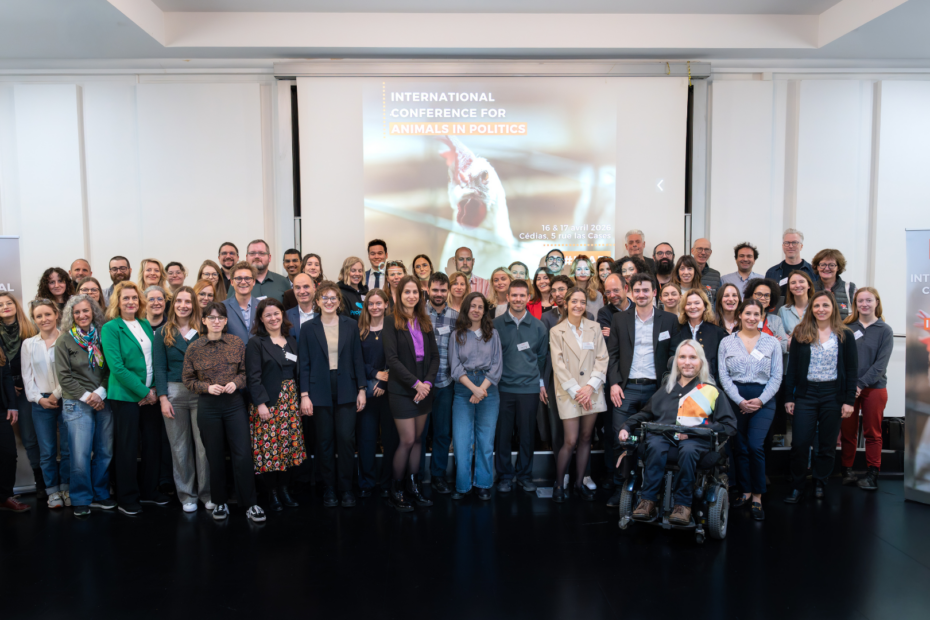
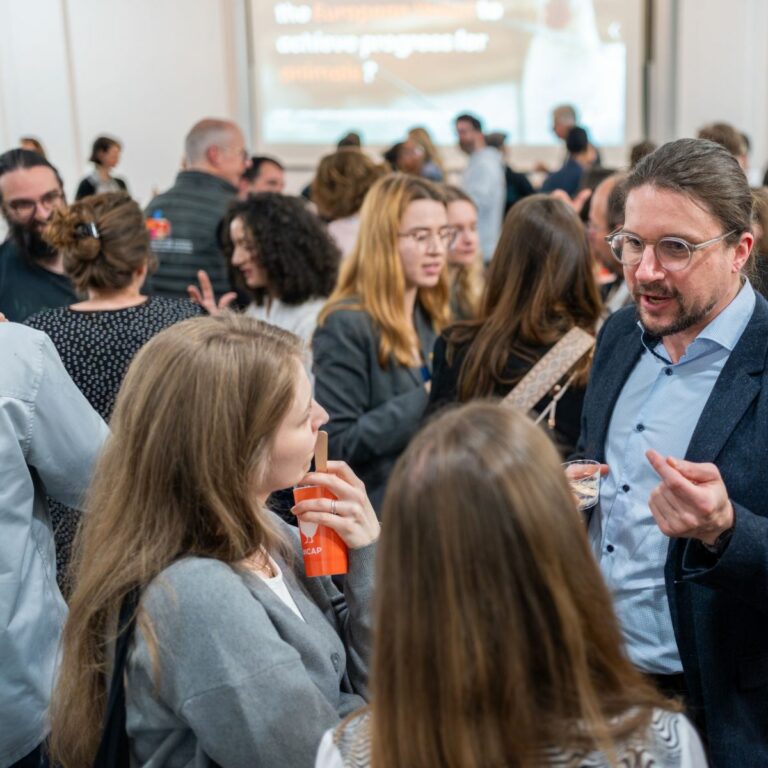
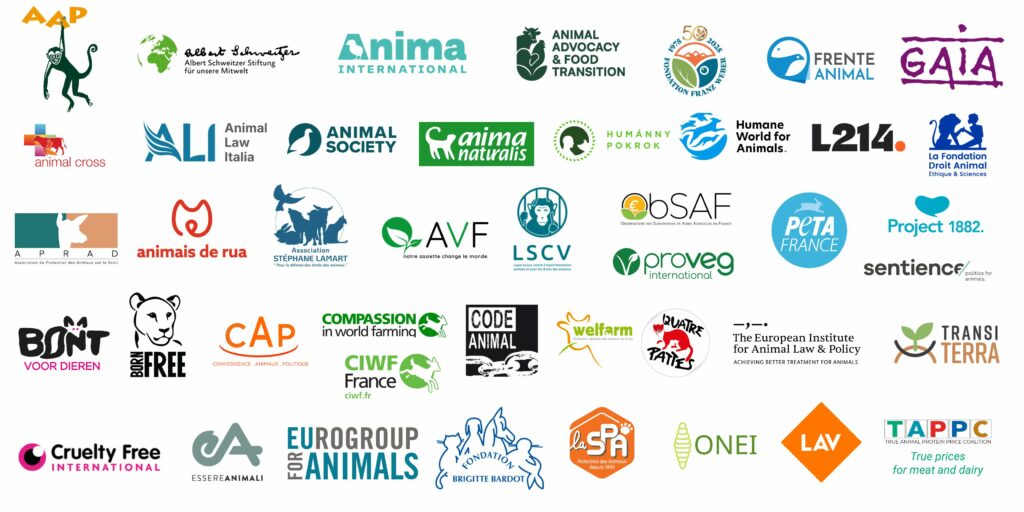
On April 16 and 17, 2026, Convergence Animaux Politique brought together 60 animal protection NGOs in Paris from 12 European countries (including Germany, the Netherlands, Greece, Italy, Spain, and Slovakia) to strengthen international cooperation for animal welfare, in an alarming political context.
Following a successful first edition of the International Conference for Animals in Politics (ICAP) in 2024, the second edition of this event helped organize the response of animal protection NGOs to resist setbacks at the European Union level and achieve new policy advances for animals in Europe. The event also helped raise the profile of the animal advocacy movement in national media outlets such as Le Monde.
Discover a glimpse of the event in video, as well as participants’ testimonials. Among them were the SPA, One Voice, L214, the Brigitte Bardot Foundation, PETA, Eurogroup for Animals, CIWF, Anima International, Humane World for Animals, the Albert Schweitzer Foundation, Essere Animali, and others.
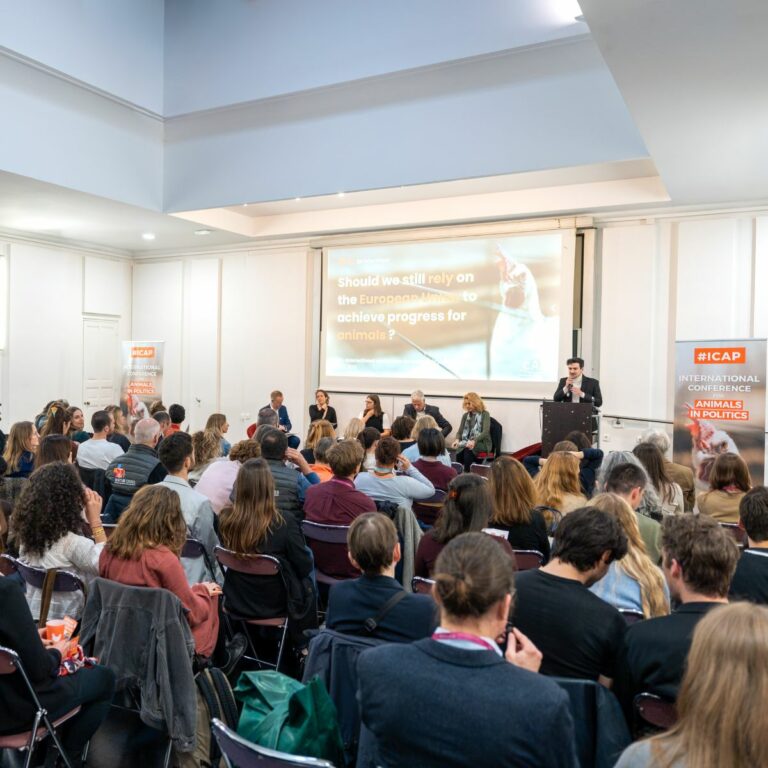
Day 1: A roundtable to renew momentum for animal protection in Europe
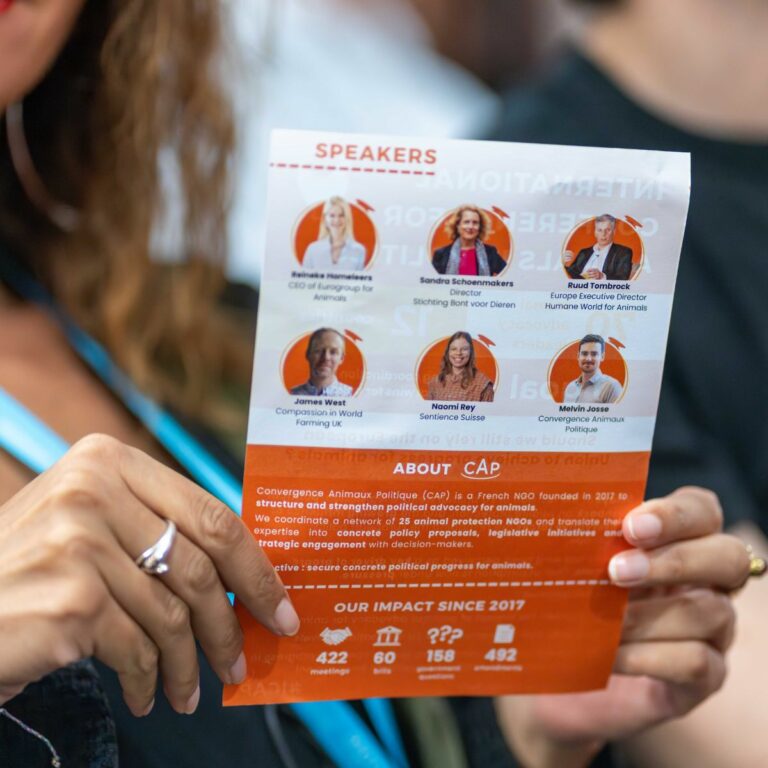
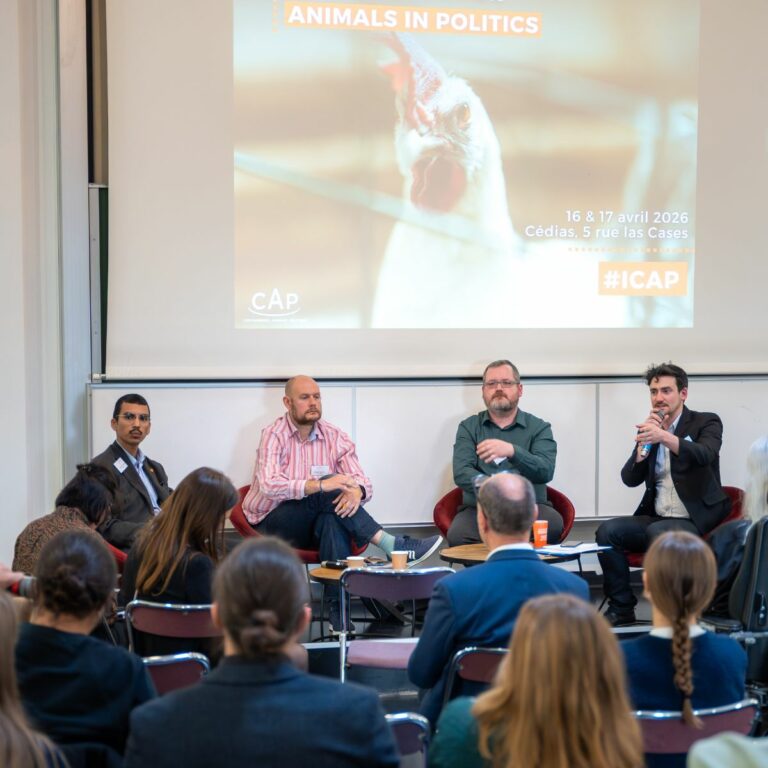
On Thursday, April 16, six key animal protection actors specializing in advocacy shared their strategic vision for revitalizing animal protection in Europe:
- Stéphanie Ghislain, Head of Advocacy, Eurogroup for Animals
- Sandra Schoenmakers, Director, Stichting Bont voor Dieren (Netherlands)
- Ruud Tombrock, Europe Director, Humane World for Animals
- James West, Head of Public Affairs, CIWF (United Kingdom)
- Naomi Rey, Director, Sentience Suisse
- Melvin Josse, Director, Convergence Animaux Politique (France)
Structured in three parts – diagnosis, strategies, and outlooks – this roundtable made it possible to analyze current political obstacles and identify new avenues for policy action in favor of animals at both national and European levels. You can find the replay and summary of the discussion below.






Diagnosis: a weakening European momentum
All speakers acknowledged a significant slowdown in progress within the European Union on animal protection, accompanied by repeated legislative delays (notably on the revision of animal welfare legislation) and unprecedented setbacks (such as the downgrading of the wolf’s protection status). Among the reasons cited:
- A volatile political context (health crises, the war in Ukraine, economic tensions) leading governments to prioritize security, food sovereignty, and industrial competitiveness.
- The rise of conservative forces in several Member States, where traditional values increasingly take precedence over animal welfare concerns.
- Growing influence of agricultural and industrial lobbies, which strongly shape decision-making within the European Commission.
- A lack of strategic foresight among animal protection NGOs, which failed to anticipate crises and were slow to respond collectively.
Despite these contextual and structural challenges, several speakers highlighted the EU’s driving and structuring role in animal protection:
- An international model, whose advances in areas such as livestock farming, transport, companion animals, and animal testing have inspired many countries. This includes, for example, the ban on animal testing for cosmetics, later adopted by countries such as Canada, Mexico, and Australia.
- A powerful regulatory framework capable of harmonizing standards across Member States while allowing them to go further.
The challenge, therefore, is not to abandon the European level, but to redefine NGO advocacy strategies.
Strategies: Rethinking Political Levers of Action
Faced with this diagnosis, speakers strongly emphasized the need for the animal protection movement to reinvent itself. A central question emerged: where should resources be invested to maximize impact?
While advocacy at the European level remains essential in the long term, particularly due to its broader ripple effects, NGOs must also invest more at national and local levels in order to be more responsive and achieve targeted progress. A pragmatic approach consists in identifying, depending on the issue, the countries or institutions offering the greatest leverage, based on political opportunities, national contexts, and specific power dynamics. Some countries or regions can thus serve as laboratories for innovation. National dynamics can then be scaled up to the European level.
Speakers identified several necessary shifts in advocacy strategies:
- Strengthening economic arguments: demonstrating that certain practices (such as intensive livestock farming or the fur industry) impose high societal costs, and that viable economic alternatives exist.
- Better linking animal welfare, public health, and environmental issues, in order to embed them within broader political priorities.
- Engaging businesses through a combination of dialogue and pressure, to create market dynamics and remove political barriers.
- Broadening advocacy targets by engaging more with opposing or undecided stakeholders, including within conservative circles.
Speakers also highlighted the difficulty NGOs face in mobilizing large numbers of citizens “in the streets.” While public support in opinion polls is significant, it does not translate into voting behavior or consumption choices – which are strongly influenced by agri-food industry marketing. The challenge for NGOs is to bridge this gap by deploying new, more creative and collective forms of mobilization.
Outlook: Rebuilding a path toward progress
This strategic discussion helped identify the key prerequisites for rebuilding a momentum of progress for animals in Europe:
- Keeping animal welfare on the political agenda, by continuing to develop concrete proposals and ensuring a constant presence in decision-making spaces to prevent the issue from being sidelined.
- Targeting achievable goals, by prioritizing incremental progress over broad, systemic reforms, and focusing on high-impact measures, particularly the reduction of the most extreme forms of confinement.
- Strengthening cooperation among stakeholders, by addressing fragmentation within the movement through better sharing of expertise and strategies, improving coordination between national and European levels, and leveraging local successes to encourage broader adoption.
- Adopting a long-term perspective, by accepting periods of slowdown and building strategies capable of outlasting political cycles. In a challenging context, the priority is also to support the movement and its actors to ensure its resilience.
Following the opening conference dedicated to analyzing European dynamics and the movement’s levers for action, NGOs translated these reflections into concrete lines of action during a day of workshops.
Day 2: Workshops to strengthen NGO cooperation
On Friday, April 17, NGO leaders and advocacy managers took part in a day of workshops aimed at exchanging views on effective political strategies to advance animal welfare and fostering the emergence of new areas of transnational cooperation.





Lessons learned from successful advocacy campaigns
Several NGOs shared their experiences from successful policy campaigns in order to draw lessons and identify best practices that could be replicated in other countries.
After 14 years of campaigning and seven legislative attempts, Anima International succeeded in 2025 in securing the adoption of a law banning fur farming in Poland, the European Union’s largest producer. Kirsty Henderson, President of the organization, presented the key lessons from this political victory.
She first highlighted the contextual factors that helped pave the way for the adoption of the law. The structural decline of the fur industry gradually weakened the sector economically, reducing its influence and its ability to resist reform. The war in Ukraine further damaged the industry’s reputation, particularly due to its links with Russia, reinforcing a political environment less favorable to its legitimacy. Finally, a generally more receptive political context emerged, helping to unlock a legislative process that had long been stalled.
She then outlined the pillars of the strategy implemented:
- Direct and sustained political engagement, with more than 100 parliamentary meetings and a continuous presence in Parliament to keep the issue on the agenda and make it unavoidable.
- Building cross-party alliances, through a politically neutral strategy designed to overcome partisan divides and broaden parliamentary support.
- Credibility based on expertise, through the production of an economic report and field investigations, enabling a fact-based approach to the issue.
- Gradual public engagement, by preparing citizens to mobilize ahead of key political decisions.
Among the main challenges encountered:
- An overly rapid scaling-up of certain actions, making coordination more complex.
- Insufficient targeting of key MPs, which initially limited lobbying effectiveness.
- Late identification of certain institutional blockages, linked to an incomplete understanding of the legislative process upstream.
The success of an advocacy campaign depends on the ability to be fully prepared when a political window of opportunity opens, combining strategic anticipation with operational flexibility. This campaign helped build political and institutional capital through the creation of a network of allies and the support of 75% of MPs, and established a precedent that will facilitate future reforms.
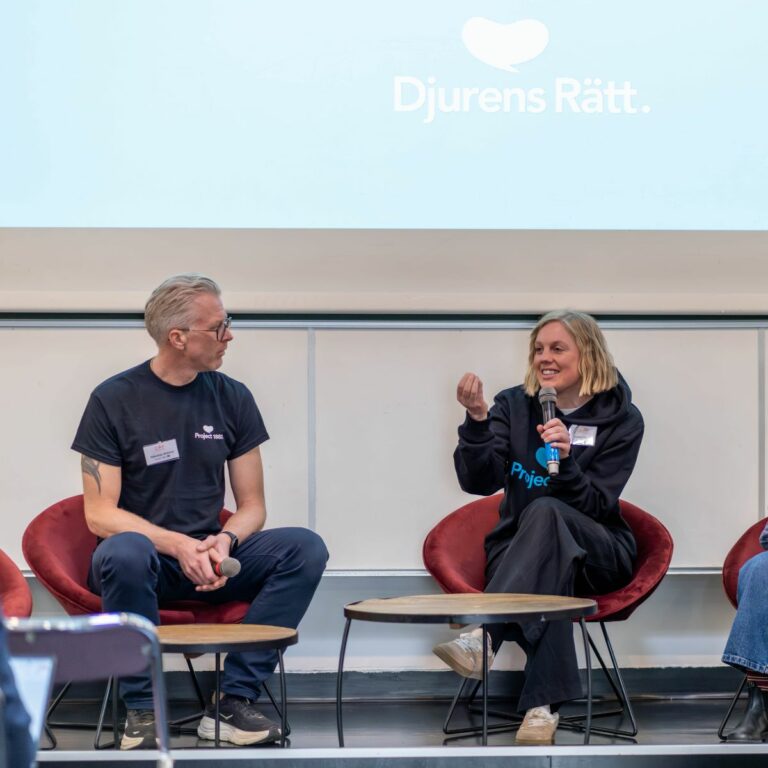
Project 1882, represented by Gunilla Lindgren and Sebastian Wiklund, shared insights from a collective advocacy campaign aimed at defending a landmark animal welfare standard in Sweden. In 2023, the Swedish government considered relaxing several rules related to farm animal welfare, including the historic right of dairy cows to graze outdoors. In response to this threat, a broad coalition launched the “I Want to Graze” campaign, which ultimately led the government to abandon its deregulation attempt.
Key success factors identified included:
- A broad and cross-sector coalition bringing together animal protection NGOs, environmental organizations, and consumer groups, thereby strengthening political legitimacy and influence.
- Cultural framing of the message, emphasizing the Swedish rural landscape and combining animal welfare, environmental, and cultural arguments to broaden public support.
- Strong evidence of public backing, through petitions and opinion polls, which helped make the political cost of reversing the standard clearly visible.
However, the organization also highlighted the difficulty of turning a defensive victory into broader progressive momentum for other species or issues. A successful defensive campaign does not necessarily lead to further advances.
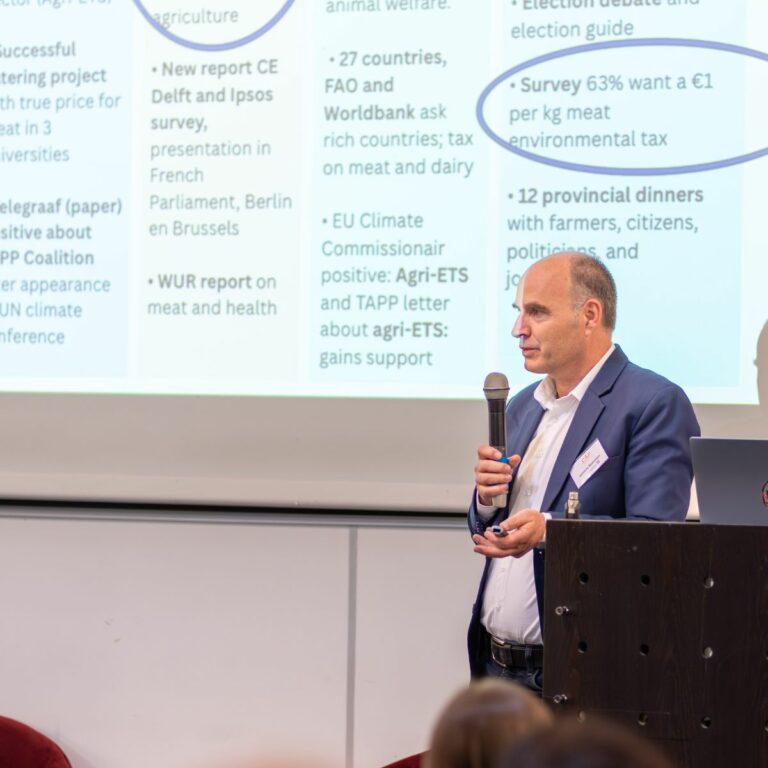
The meat tax campaign in the Netherlands, presented by Jeroom Remmers of the TAPP Coalition, illustrates a strategy of gradually transforming a politically sensitive issue into an acceptable food transition policy. Key lessons include:
- Reframing a tax perceived as punitive into a “fair price for meat” helps shift the debate and makes the proposal politically credible, even on an initially taboo topic.
- Economic redistribution is essential to broaden social acceptability. A central element of the strategy was the redistribution of revenues: the proposed tax would generate around €1.3 billion per year, reinvested in abolishing VAT on fruits and vegetables (reduced to 0%) as well as in subsidies for farmers to support improved animal welfare and the transition toward more sustainable practices.
- Including farmers as beneficiaries of the reform is a key lever to reduce opposition and ensure the political feasibility of food transition policies.
This campaign highlighted a significant potential impact, with an estimated 60% reduction in red meat consumption and 30% reduction in poultry consumption over ten years, as well as major animal welfare gains, including hundreds of millions of animals spared. It also contributed to broader policy developments, notably the adoption in Denmark of restrictions on meat promotions exceeding 25% discounts.
Dylan Underhill, Public Affairs Manager (Europe and the United Kingdom) at Cruelty Free International, presented the RAT list (Replace Animal Tests list), a strategic tool identifying regulatory animal tests that are still in use despite the existence of non-animal alternatives. This work aims to pinpoint concrete reform targets within complex regulatory systems.
The strategy is based on several key elements. The creation of a scientific and evolving database helps to objectify existing practices and make them visible to decision-makers. The RAT list also serves to translate a technical issue into actionable political priorities by identifying realistic, directly implementable reforms. Finally, it facilitates alignment between scientific expertise and advocacy by linking data, regulation, and public policy action.
Key lessons from this approach include:
- The production of knowledge tools helps make complex regulatory systems more understandable and transparent.
- Identifying precise targets increases the ability to achieve concrete, incremental victories.
- Linking science and advocacy is a central lever for accelerating the transition toward non-animal methods.
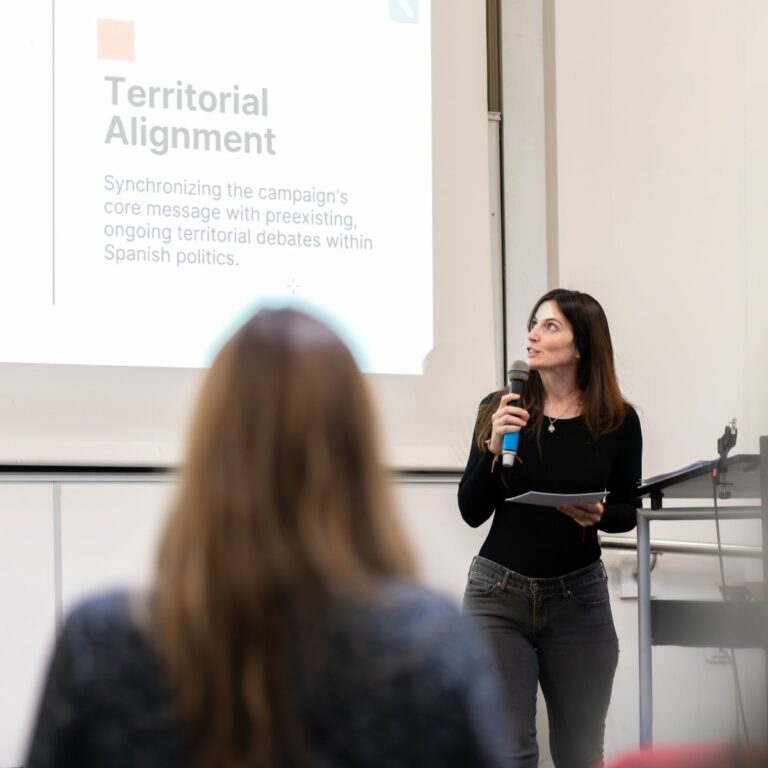
The “No es mi cultura” campaign, led as a citizens’ legislative initiative in Spain and presented by Cristina Ibáñez from AnimaNaturalis, aimed to remove bullfighting’s status as cultural heritage and to restore decision-making powers to regional and local authorities over this practice. The campaign was part of a democratic mobilization strategy using Spain’s institutional tools for citizen participation.
Key strategic lessons highlighted included:
- Using existing democratic mechanisms: Resorting to a popular legislative initiative allows the demand to be embedded within the institutional framework and strengthens its political legitimacy, illustrating the importance of leveraging available democratic tools to enhance a campaign’s credibility.
- Reframing the narrative: By challenging the idea that bullfighting represents universally shared cultural heritage, the campaign shows the need to reshape dominant narratives in order to open up genuine institutional debate.
- Structured citizen mobilization: Demonstrating visible and organized public support helps materialize meaningful opposition and highlights the decisive role of citizen engagement in influencing formal decision-making processes.
How to adapt advocacy strategies in a context of rising conservatism?
In a context of growing electoral support for conservative and far-right parties across Europe, animal protection NGOs are facing complex strategic choices regarding political advocacy. This workshop-discussion highlighted two main strategic approaches and identified a possible third way.
On the one hand, one approach holds that the far right cannot be ignored given its importance in the current political landscape. From this perspective, “engaging in dialogue does not mean endorsing,” and impact depends on the ability to make one’s voice heard across the full spectrum of political actors. The Italian experience of LAV illustrates this strategic approach: the long-term dominance of right-wing and far-right forces can make political engagement unavoidable in order to secure concrete progress for animal protection. Dialogue is therefore used as an operational negotiation tool, without implying political support or alignment.
On the other hand, a more cautious position emphasizes the risks associated with such interactions, beyond ideological considerations, particularly in terms of NGOs’ public image and potential tensions with supporters and partners. Participants also highlighted the long-term effects of certain strategic choices, especially the risks of indirectly legitimizing political dynamics considered harmful to democratic and social balances. From this perspective, time and resources are better invested elsewhere in order to maximize NGOs’ impact for animals.
Ultimately, the discussions brought forward the possibility of a “third way”: a case-by-case strategy aimed at balancing impact with risk management. This approach relies on a careful assessment of political opportunity windows, a targeted selection of interlocutors (rather than engaging with parties as a whole), and the adaptation of tactics to the specific context. It combines selective engagement with reputational vigilance, while maintaining clear organizational red lines. It also encourages diversifying advocacy levers, notably through dialogue with companies, in order to continue achieving progress for animals in a changing political environment.
Workshops to foster experience-sharing among NGOs
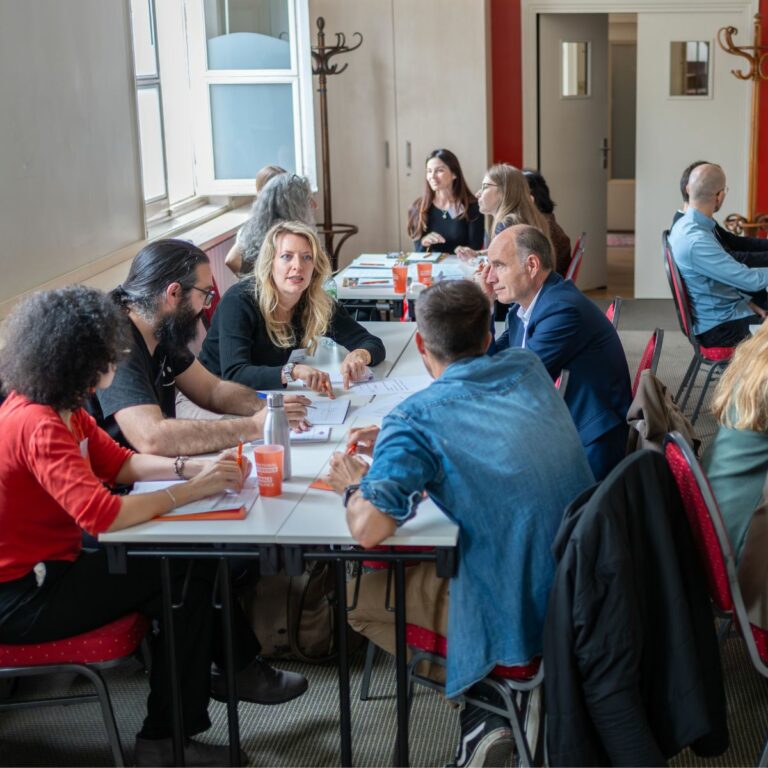
31 NGOs took part in workshops focused on sharing experiences from their political campaigns, enabling them to collectively identify best practices and mistakes to avoid, in order to improve the effectiveness of their future advocacy efforts.
12 NGOs participated in co-development workshops aimed at finding solutions to concrete challenges. This format was designed to encourage collective intelligence, improve strategic problem-solving, and generate shared courses of action adapted to the common challenges faced by the animal protection movement.
23 NGOs joined thematic workshops (farmed animals, food transition, wild animals, animal testing) to reflect on ways of structuring transnational cooperation capable of concretely influencing power dynamics at both national and European levels.
These workshops were complemented by networking sessions designed to foster new partnerships and strengthen connections among NGO representatives from different European countries.
This event helped strengthen a collective momentum that is essential for defending and advancing animal welfare in Europe. CAP warmly thanks all its donors and volunteers, as well as the Craigslist Charitable Fund, without whom the organization of this seminar would not have been possible. Their commitment makes it possible to create unique working spaces that are essential for strengthening the movement.
To continue and amplify this impact, and to enable the organization of future events dedicated to animal protection, we invite those who wish to support our work. Every contribution directly helps build a more effective and sustainable collective effort in favor of animals.