A Historic Political Victory Against Trophy Hunting
A Historic Political Victory Against Trophy Hunting
After more than three years of political, public, and civil society mobilization, the French Government announced on July 28, 2026, that it would end imports of hunting trophies from threatened species. This marks the culmination of a long-term advocacy campaign led by Convergence Animaux Politique (CAP), alongside our partner Humane World for Animals Europe.
For more than three years, we mobilized every political lever at our disposal to build support among lawmakers, bring the issue into the public debate, press the Government to act, and ultimately secure this historic political victory.
Despite opposition from the hunting lobby, which has long enjoyed a degree of political immunity in France, we demonstrated that collective action by NGOs and lawmakers, grounded in scientific evidence and driven by a long-term advocacy strategy, can shift the political balance of power. This is a concrete political step forward for wild animals and biodiversity.
It is also a powerful symbol of progress in challenging the hunting lobby in France, paving the way for further advances for animals.
A practice that threatens global biodiversity
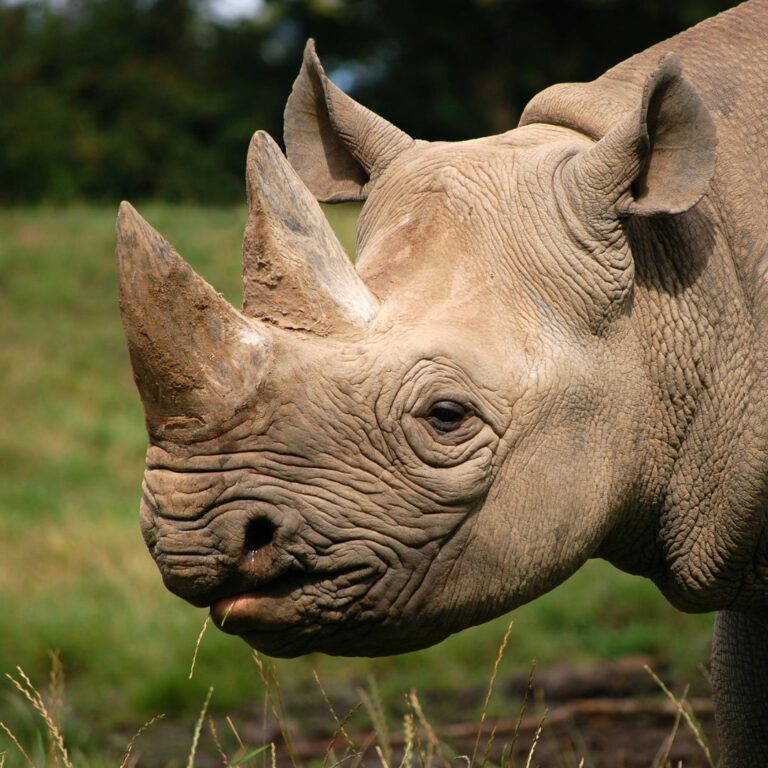
Trophy hunting involves killing wild animals (often iconic or threatened species such as rhinoceroses, cheetahs, and polar bears) in order to keep all or part of their bodies, including their heads, skins, horns, or tusks, as trophies.
More than 200,000 animals are killed through this practice worldwide every year. At a time when the planet is facing its sixth mass extinction, trophy hunting contributes to the destruction of global biodiversity.
Available studies show that less than 0.4% of the revenue generated by trophy hunting actually reaches local communities. Yet this luxury practice is reserved for a small minority of wealthy hunters who take part in safaris organized by specialized agencies, with governments allowing the export and import of these trophies, including France, the sixth-largest importer in Europe.
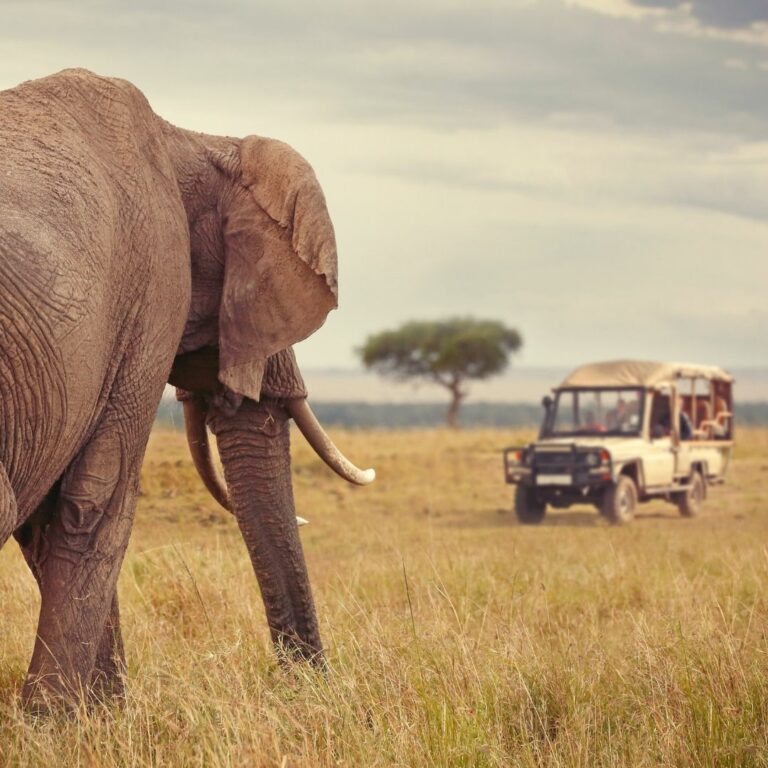
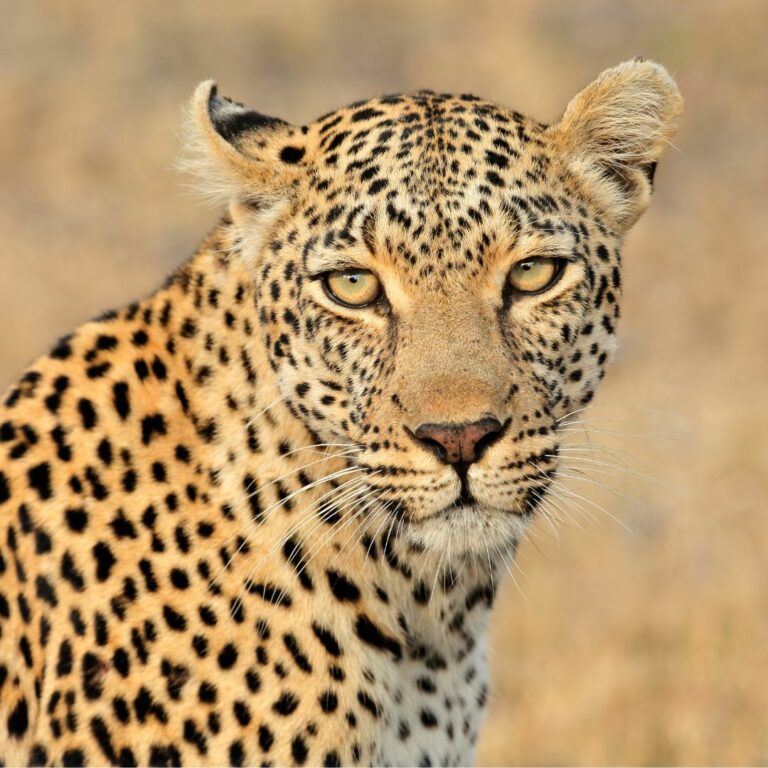
Between 2013 and 2023, France authorized the import of more than 1,134 trophies from 42 species protected under CITES, including 297 leopards and 221 African elephants, two species listed on the IUCN Red List as facing a high risk of extinction.
In partnership with Humane World for Animals Europe, Convergence Animaux Politique (CAP) mobilized to end imports of hunting trophies from threatened species into France.
Three Years of Successful Political Advocacy
The first phase focused on bringing the issue onto the political agenda and building unprecedented cross-party support among lawmakers. The second phase focused on expanding the coalition following the dissolution of the French National Assembly and securing targeted political advances to raise the issue’s public profile. Finally, the third phase focused on directly engaging the Government to secure its support and pave the way for regulatory action.




November 2022 to June 2024: Building Cross-Party Support in Parliament
Following the launch of the campaign in November 2022, we held numerous meetings with Members of Parliament to identify political allies willing to champion the issue in Parliament.
A decisive first step was achieved through our work with Senator Céline Boulay-Espéronnier. On May 26, 2023, she introduced France’s first bill seeking to end the issuance of import permits for hunting trophies from threatened species.
A few weeks later, on June 23, 2023, we secured a first political breakthrough with the adoption of an amendment introduced by MP Sandra Regol, aimed at giving French customs authorities greater resources to combat the illegal import of hunting trophies.
At the same time, CAP opened a dialogue with the Government through a meeting with the office of the Secretary of State for Biodiversity on May 23, 2023. This was the first in a long series of ministerial discussions: in total, around ten meetings with Government representatives were held on this issue.
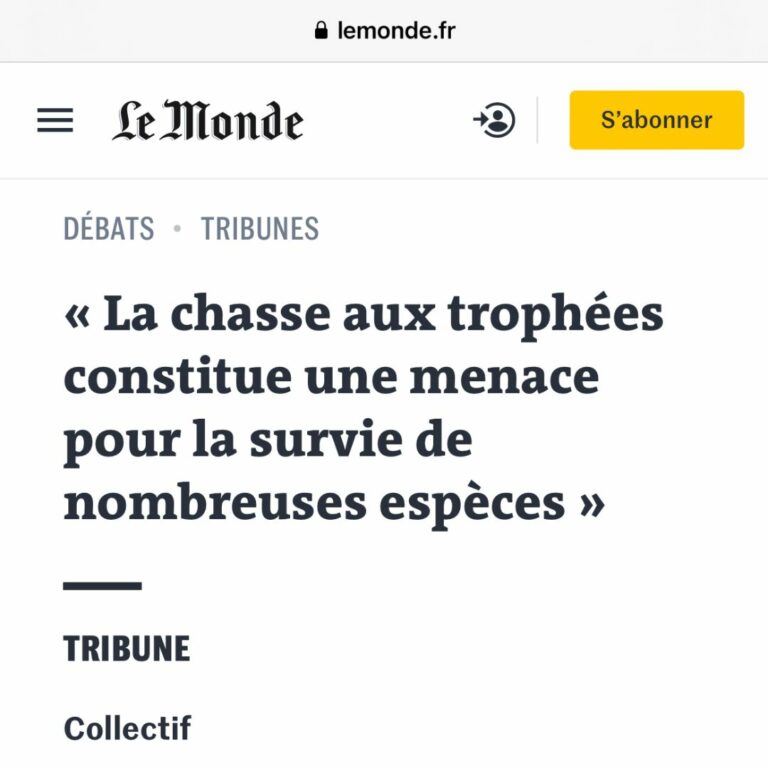
On November 21, 2023, MP Sandra Regol introduced a bill in the National Assembly for the first time seeking to ban the import and export of hunting trophies from protected species. To support the bill, CAP contributed to the publication of a joint op-ed in Le Monde, in which more than 130 scientists, experts, and NGOs called on lawmakers to take action against this threat to biodiversity.
On January 31, 2024, the bill was placed on the National Assembly’s agenda and adopted almost unanimously during its examination by the Sustainable Development Committee. However, the democratic debate was cut short because the allotted parliamentary time ran out. This missed opportunity delayed the eventual victory by several years, but demonstrated growing parliamentary support for our proposal.
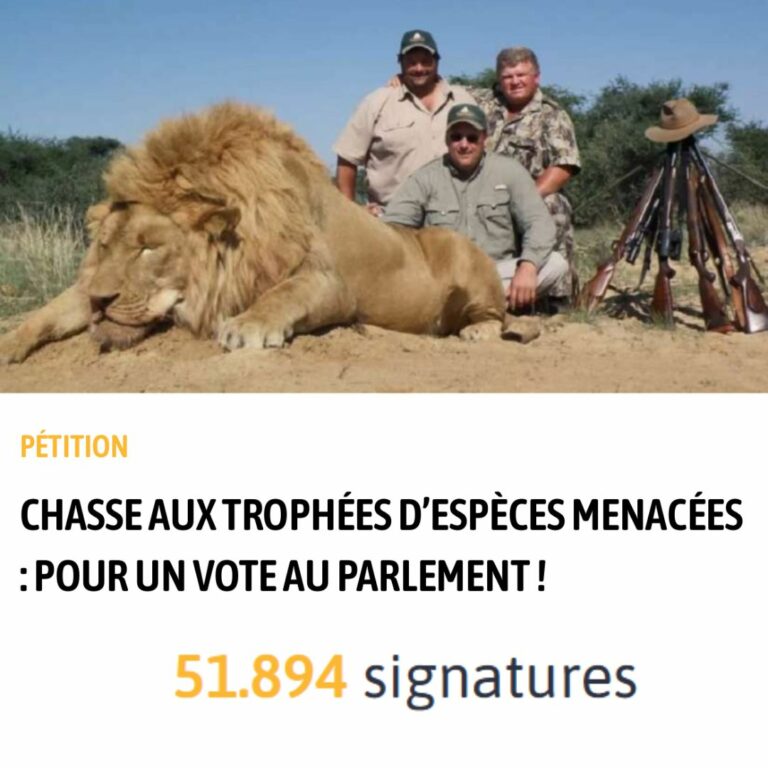
To secure a new parliamentary debate, CAP then launched a public petition entitled “Trophy Hunting of Threatened Species: Let Parliament Vote!”, which gathered more than 50,000 signatures.
The dissolution of the National Assembly following the European elections brought parliamentary work to an abrupt halt. A new phase then began, focused on rebuilding and expanding the coalition.
July 2024 to December 2025: Expanding and Rebuilding the Coalition
Following the reshuffling of the National Assembly, several of our political allies lost their seats and all ongoing parliamentary work became void. CAP therefore began engaging with newly elected lawmakers to rebuild the political momentum generated during the previous phase, particularly through amendments and parliamentary questions to the Government.
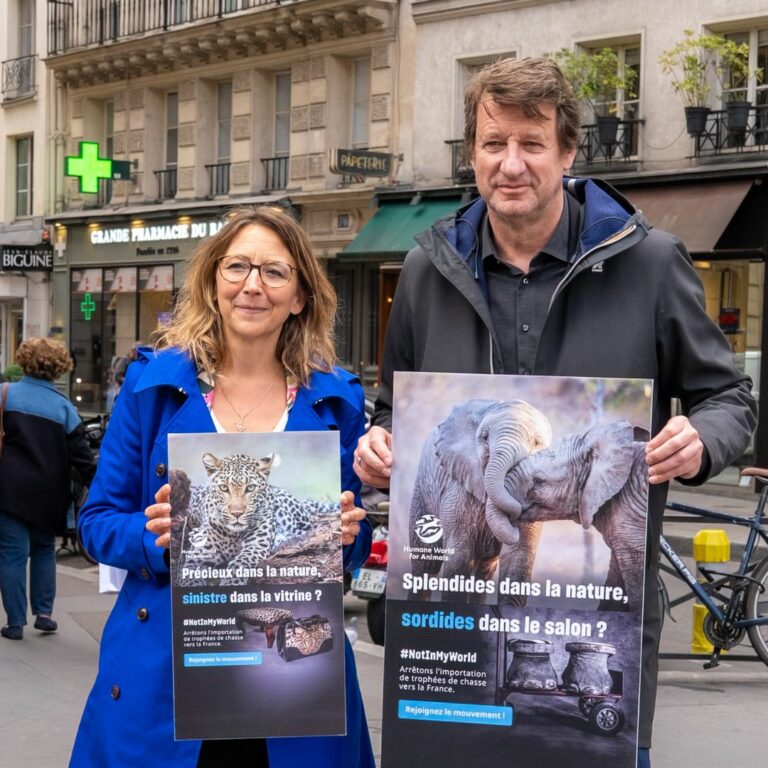
In spring 2025, the issue returned to the political agenda thanks to the support of two longstanding political allies. On April 17, MP Sandra Regol introduced a new bill in the National Assembly. With CAP’s support, the bill secured 81 co-signatories from nine political groups. On June 12, Senator Yannick Jadot introduced a corresponding bill in the Senate to support the initiative and further raise the issue’s political profile.
CAP used the 2026 Finance Bill as an opportunity to secure further political progress. Following a meeting organized between NGOs and lawmakers on budget-related animal protection issues, CAP successfully helped secure the introduction of more than twenty amendments in support of animals and biodiversity.
On October 22, 2025, a first amendment seeking to tax importers of trophies from protected species was adopted by the National Assembly’s Finance Committee. Then, on November 20, 2025, the National Assembly adopted a second amendment seeking to tax travel agencies organizing trophy-hunting trips.
Although both measures were ultimately removed after the Government invoked Article 49.3 of the French Constitution to pass the budget without a vote, they helped generate broader media coverage of the issue, including on national news channels, and confirmed the existence of a political consensus in favor of regulating the practice.
January to July 2026: Securing Government Support and Action
With the presidential term approaching its end and the parliamentary calendar increasingly congested, securing the final passage of legislation became increasingly uncertain. A regulatory route remained available, and France had already used it in 2015 to ban imports of lion trophies. CAP therefore redirected its advocacy strategy toward the Government, with the support of lawmakers.
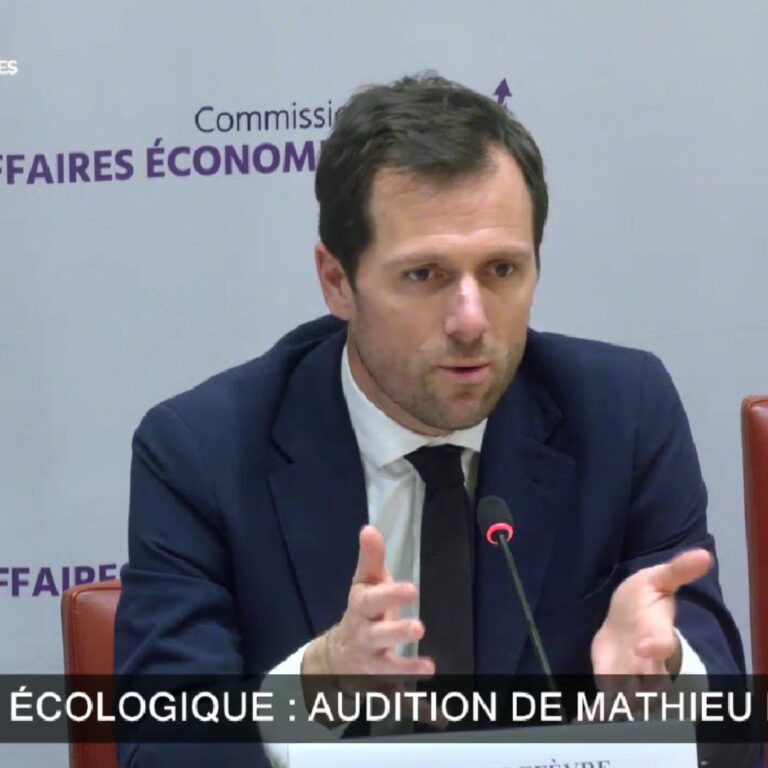
Following several ministerial meetings and a letter sent to the Government, a major breakthrough came on March 20, 2026. In an official letter to CAP, Minister Delegate for the Ecological Transition Mathieu Lefèvre stated that he supported banning imports of hunting trophies from threatened species into France.
He publicly confirmed this position on April 7, 2026, during a parliamentary hearing, after Senator Yannick Jadot questioned him on the issue at CAP’s request.
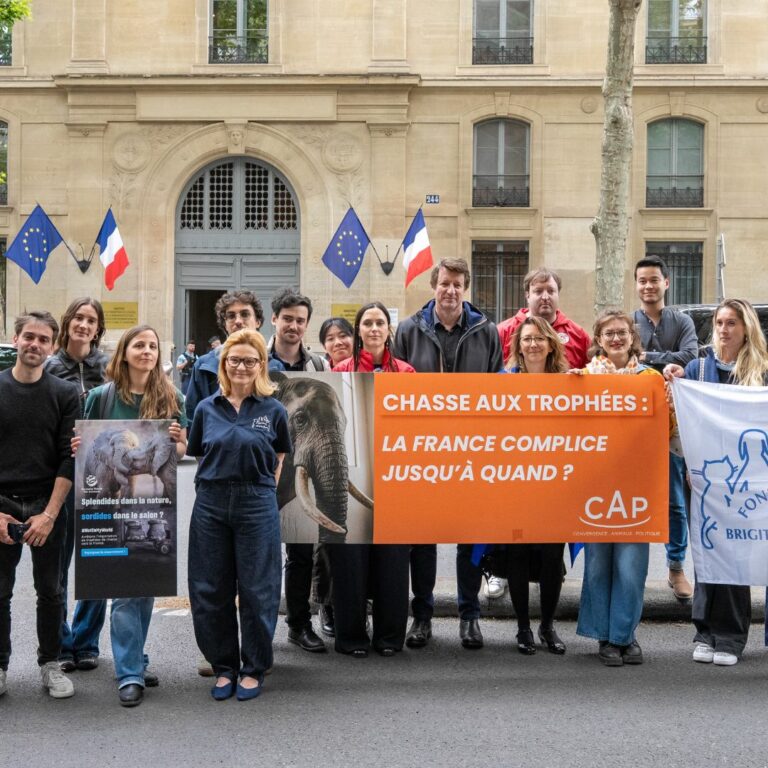
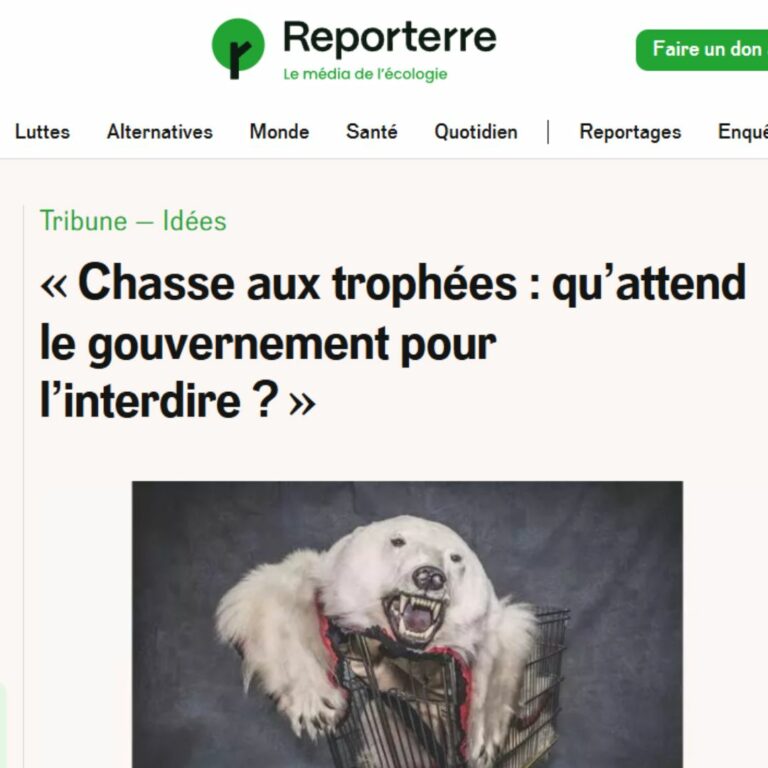
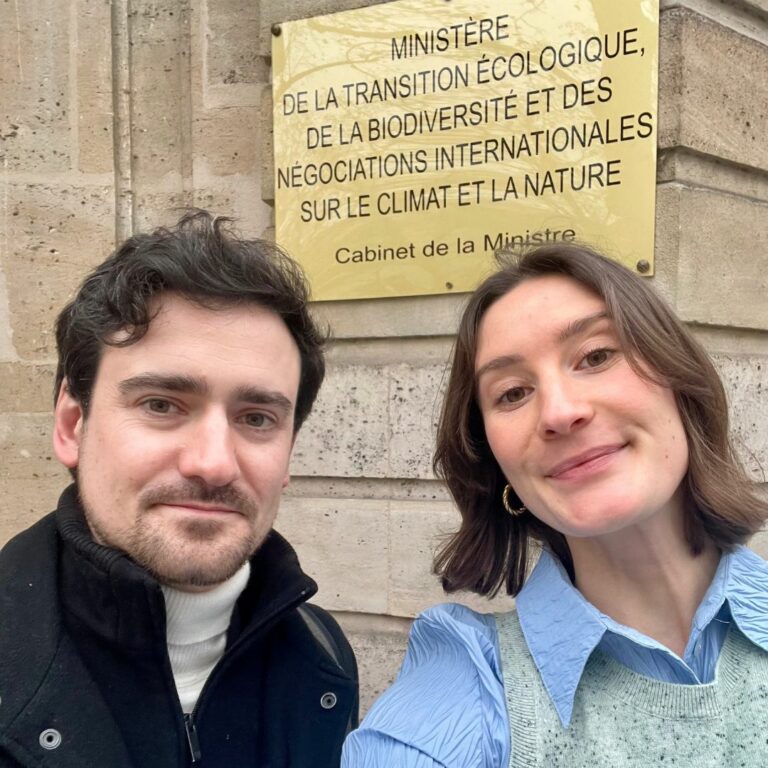
To turn these commitments into action, CAP coordinated the publication of a cross-party op-ed in Reporterre, endorsed by 50 lawmakers from 11 different political groups, and organized a public demonstration outside the Ministry on June 12, 2026, attended by MP Sandra Regol, Senator Yannick Jadot, and several NGOs.
This action prompted an immediate meeting with the Minister’s Chief of Staff and marked a genuine acceleration in the final political decision-making process. A few days later, the Minister met with us directly, followed by the Prime Minister on July 28, 2026, to announce the end of imports of hunting trophies from threatened species into France.
After more than three years of campaigning, unprecedented parliamentary mobilization, and sustained and demanding engagement with the Government, we secured another historic political victory. France now joins other European countries that have already adopted strong restrictions, including Belgium, the Netherlands, and Finland.
Finally, CAP supported the introduction of two European resolutions, one in the National Assembly and one in the Senate, to pave the way for a broader ban across the European Union.
A Collective Victory for Wild Animals and Biodiversity
This victory, supported by 91% of people in France (IFOP, 2023), would not have been possible without the many lawmakers who agreed to champion this cause across party lines.
We would particularly like to thank MP Sandra Regol and Senator Yannick Jadot for their sustained commitment, as well as MP Corinne Vignon and Senator Céline Boulay-Espéronnier for helping bring this issue onto the parliamentary agenda. We would also like to thank all the lawmakers who contributed to or supported this campaign by introducing amendments or submitting questions to the Government, including Senator Samantha Cazebonne, Senator Arnaud Bazin, and MPs Anne Stambach-Terrenoir, Bastien Lachaud, Jean-Marc Zulesi, Eva Sas, Marie-Pierre Rixain, Michel Castellani, Olivier Falorni, Anne-Cécile Violland, Ian Boucard, Vincent Ledoux, and many others.
This victory also belongs to our NGO partners. We extend our warmest thanks to Humane World for Animals Europe for its trust and commitment alongside us since the beginning of our partnership, as well as to all the organizations that contributed to this collective mobilization: Fondation Droit Animal, Éthique et Sciences (LFDA), FOUR PAWS, Fondation Brigitte Bardot, Jane Goodall Institute France, and Born Free Foundation.
Finally, we extend our deepest thanks to everyone who supports our work: individual donors, philanthropic partners, and volunteers. Their continued support enables CAP to run ambitious advocacy campaigns and turn them into concrete political victories.
This victory represents a major step forward for wild animals. It also demonstrates our ability to shift the political balance of power in the face of powerful and long-protected interests, paving the way for further political progress for animals and biodiversity. Your support helps build tomorrow’s political victories.